*Inventory fluctuates daily. Call to verify exact board foot quantities.
Because every board is unique, we do not sell directly online. Contact us to get pricing or have us pull the perfect stack for you.

Eastern Cedar has a Janka hardness rating of 390 lbf. This relatively low hardness indicates it is a softwood, making it easy to cut, shape, and work with hand or power tools. However, it is less suitable for high-impact applications and requires careful handling to avoid dents and scratches.
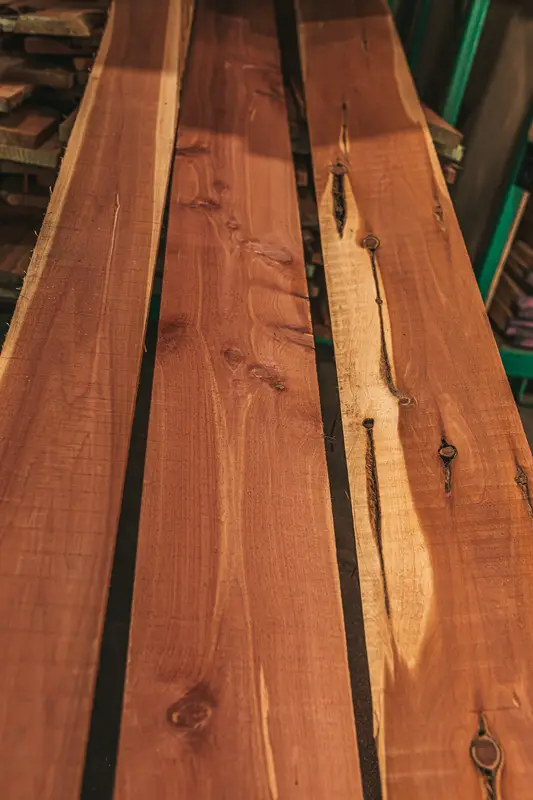
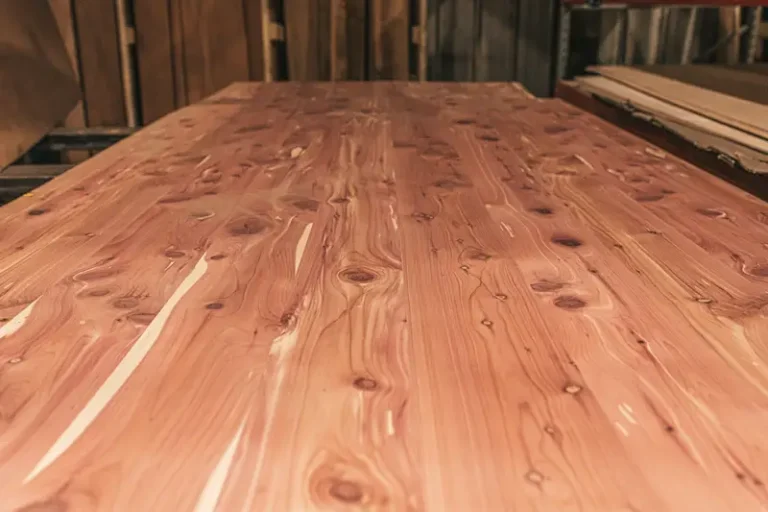
Eastern Cedar showcases a rich, warm reddish-brown color that often lightens with age to a soft tan or grayish hue. Its grain is typically straight and fine, with occasional irregularities and knots that contribute to its rustic charm. The wood may exhibit subtle variations in color, including hints of purple or pink, and sometimes features a faint, straight grain pattern. This species is known for its uniform texture and the natural beauty of its surface, which can develop an attractive patina over time when exposed to the elements.
Eastern Cedar is exceptionally easy to work with, as it machines well using both hand and power tools. It glues, nails, and screws readily, though care should be taken with pre-drilling to avoid splitting. The wood accepts stains and finishes evenly, though its porous nature may require a sealer for uniform results. It is known for its minimal movement and stability when properly dried, making it a favorite for detailed woodworking projects and outdoor applications where its natural resistance to decay is beneficial.
Eastern Cedar is widely used for outdoor furniture, fences, and siding due to its natural resistance to rot and insects. It is also popular for interior applications such as cabinetry, trim, and decorative elements. Common uses include boat building, barrel staves, and aromatic closets. In construction, it is valued for its durability and aesthetic appeal in decks, pergolas, and architectural millwork.